

Looking for an Experienced Septic Company in North Texas? Why Dirt Knowledge Matters.
The North Texas housing market is booming. From the rolling hills of Parker County and Wise County to the lakefront properties at Possum Kingdom and Eagle Mountain and the expanding developments near Graham, Haslet, Justin, Willow Park, Hudson Oaks, Rhome and New Fairview families are flocking here to build their dream homes.
When you are building a new house, it’s easy to focus on the aesthetics. But the most critical system in your home is one you (hopefully) never see: your septic system.
In these rural areas, you can’t just hook up to a city sewer. You are responsible for your own waste treatment. If you hire a contractor who lacks experience, your dream home can turn into a nightmare of backed-up pipes and soggy yards.
If you are searching for an experienced septic company in North Texas, you need a team that understands more than just plumbing. You need a team that understands the dirt.
It All Starts With the Soil and a Experienced Septic Company in North Texas
You might think plumbing is the most important part of a septic install. Actually, it’s the soil classification. A septic system relies on the ground to filter wastewater. If the soil is too rocky (common in Graham), too sandy, or full of clay (common in Wise County), a "cookie-cutter" installation will fail you need an experienced septic company. This is where our background makes the difference. We aren't just installers; we are TCEQ Certified Site Evaluators. We don’t guess. We analyze the ground composition of your specific lot to determine exactly what kind of system you need.
Precision Excavation: The 1/8” Difference
We bring the same philosophy to septic installation that we bring to our equine arena work: Precision is everything.
A septic drain field relies on gravity and perfect leveling to distribute water evenly. If a contractor digs a trench that is slightly off-level, wastewater will pool in one spot, overloading that section of the soil and causing premature failure.
We use laser grading technology to ensure our trenches and pads are accurate to within 1/8” tolerance. We don't take shortcuts, and we don't "eyeball" the grade.
31 Years of Dirt Work Experience in Texas
Experience isn't just a buzzword; it's the difference between a system that lasts 30 years and one that fails in 3. We have spent over 31 years working the land in this region. We know the geology of Parker County. We understand the challenging terrain around Possum Kingdom Lake. We’ve built pads and roads across the oil fields and subdivisions of Texas.
When you hire us as your septic installers, you get reliability and integrity.
No Shortcuts: We use the proper gravel, the right pipe quality, and the correct tank size for your family's needs.
No Surprises: We explain the process clearly and treat your property with respect.
Protect Your Investment with a Experienced Septic Company
Your new home is likely the biggest investment you will ever make. Don't risk it on a septic contractor who treats the dirt work as an afterthought.
Choose the experienced septic company that understands dirt on a deeper level.
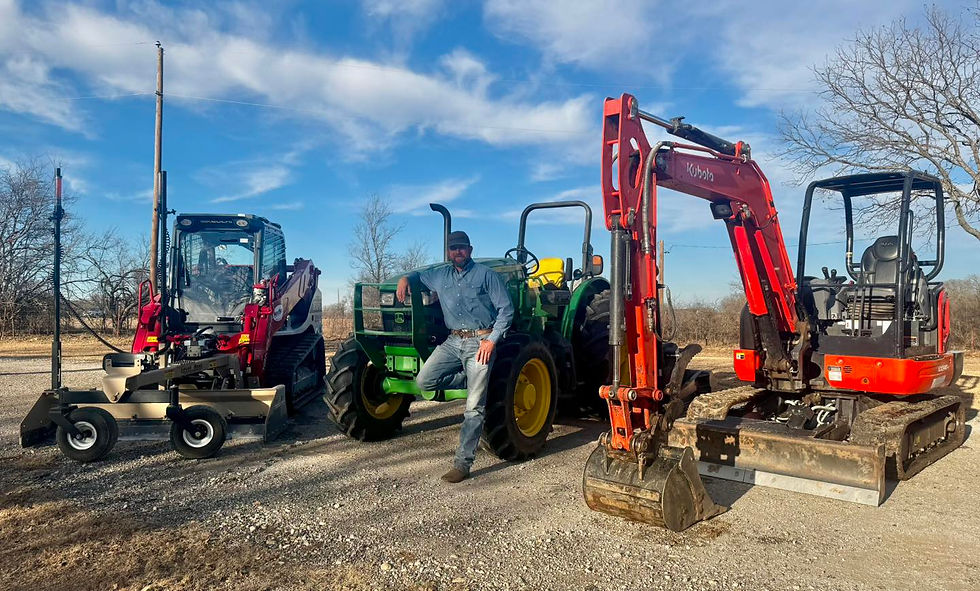
Building in Parker, Young, Palo Pinto, Wise County or surrounding areas? Let’s discuss your site plan. Contact Clint Watson (Rafter W Septic & Dirt Work owner-operator)
979-716-7530
Frequently Asked Questions about North Texas Septic Installation
Q: Why does soil classification matter for septic installation? A: Soil classification determines how well the ground can filter wastewater. If the soil is too rocky or has high clay content (common in North Texas), the system must be designed specifically for those conditions to prevent failure.
Q: Do I need a site evaluation before installing a septic tank? A: Yes. A TCEQ Certified Site Evaluator must analyze your land to determine the appropriate system size and type. This ensures compliance with Texas regulations and prevents environmental hazards.
Q: How accurate should septic trench grading be? A: Precision is critical. We recommend grading to within a 1/8” tolerance using laser technology. This ensures wastewater flows evenly through the drain field, preventing pooling and system overload.
Comments